Recent unrest has erupted across Bangladesh following the death of Sharif Osman Hadi, a prominent youth activist associated with the 2024 uprising. His assassination has sparked fears of escalating violence as the country approaches national elections scheduled for February.
Background of the Unrest
Sharif Osman Hadi was a key figure in advocating for change and was set to contest in the upcoming elections. His assassination occurred when masked attackers shot him in the head in Dhaka while he launched his campaign. After initial treatment in a local hospital, he was flown to Singapore for advanced medical care, where he succumbed after six days on life support.
The Protests and Government Response
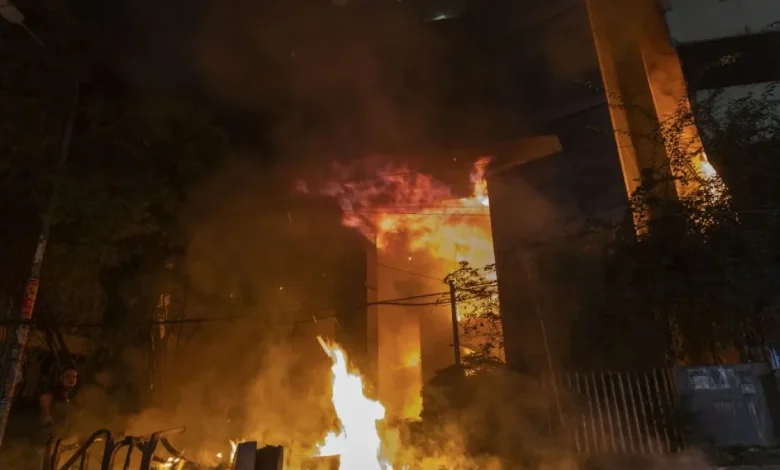
Tensions peaked on Thursday night, culminating in violent protests targeting media offices and political buildings in Dhaka and other cities. Security forces have since intensified patrols to maintain order. While streets appeared calm on Friday morning, local residents reported persistent unease, suggesting continued unrest may be imminent.
- Protesters vandalized the offices of the largest daily newspapers, Prothom Alo and Daily Star.
- The Daily Star experienced a fire, during which journalists were rescued amid securing operations by the troops.
- Demonstrators gathered in significant numbers and chanted slogans demanding justice for Hadi.
Student leaders have called for further protests to occur after Friday prayers near Dhaka University. They vow to continue until those responsible for Hadi’s murder are apprehended. The search for suspects is ongoing, with speculation that the assailant may have fled to India.
Political Implications
The unrest comes at a time of political instability in Bangladesh. Nobel Peace Prize laureate Muhammad Yunus currently leads an interim government following the ousting of long-time Prime Minister Sheikh Hasina, who fled to India amid mass protests in August 2024. The government is under pressure to implement delayed reforms, and Hasina’s party, the Awami League, is banned from participating in the upcoming elections.
Mourning and Accountability
In light of Hadi’s death, the interim government declared a day of state mourning, mandating flags to be flown at half-mast. In a televised address, Yunus acknowledged Hadi’s loss to the nation and assured a transparent investigation into his murder.
Elsewhere, protesters have targeted symbolic sites associated with Hasina, reflecting ongoing resentment against her administration. Attacks on political offices and demonstrative actions, such as blocking highways and targeting foreign diplomatic missions, show deep-seated unrest fueled by the political climate.
Future Outlook
As Bangladesh approaches the elections, the emergence of protests and incidents of violence raise concerns about the credibility of the electoral process. Activists and families of those affected during previous uprisings continue to seek justice, wondering if true accountability will ever be achieved.
The situation remains fluid, with heightened tensions anticipated as the nation mourns Hadi and demands justice amidst a backdrop of political turmoil.